
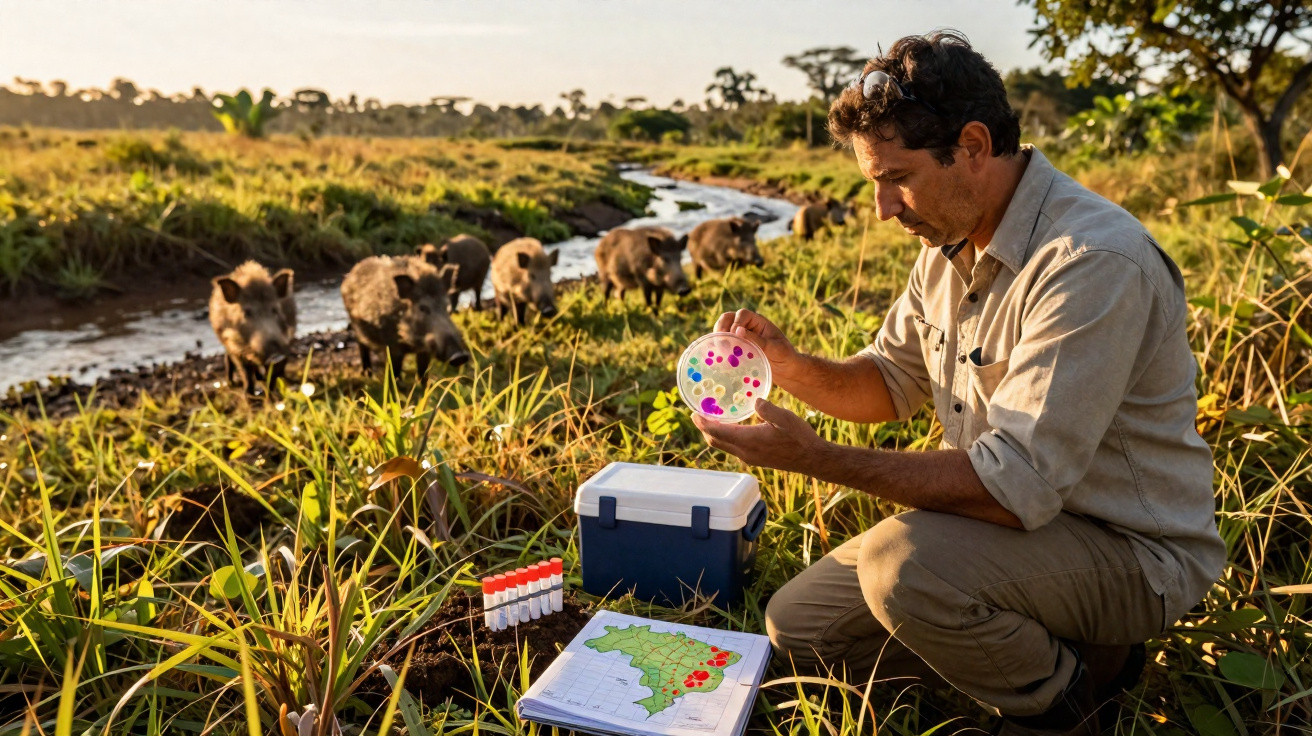
If wild boars seem to be turning up everywhere, that impression is not misplaced.
Feral pig numbers are rising quickly across North America, particularly Texas and Arizona, as well as Europe and South America.
Along with damaging crops and straying into suburban gardens, wild boars may be contributing to the spread of antibiotic-resistant bacteria, according to new research conducted in Brazil.
Brazilian public-health authorities have long been concerned that commercially reared wild boars, bred for meat in the country, could carry zoonotic bacteria and bacteria resistant to antimicrobials.
Until now, though, there was little solid evidence to support that concern – only a strong suspicion.
Wild boars and antibiotic-resistant bacteria in Brazil
To test whether those suspicions were justified, scientists took rectal swabs from 100 healthy European wild boars (Sus scrofa scrofa) kept on two commercial farms in Brazil's Goiás State.
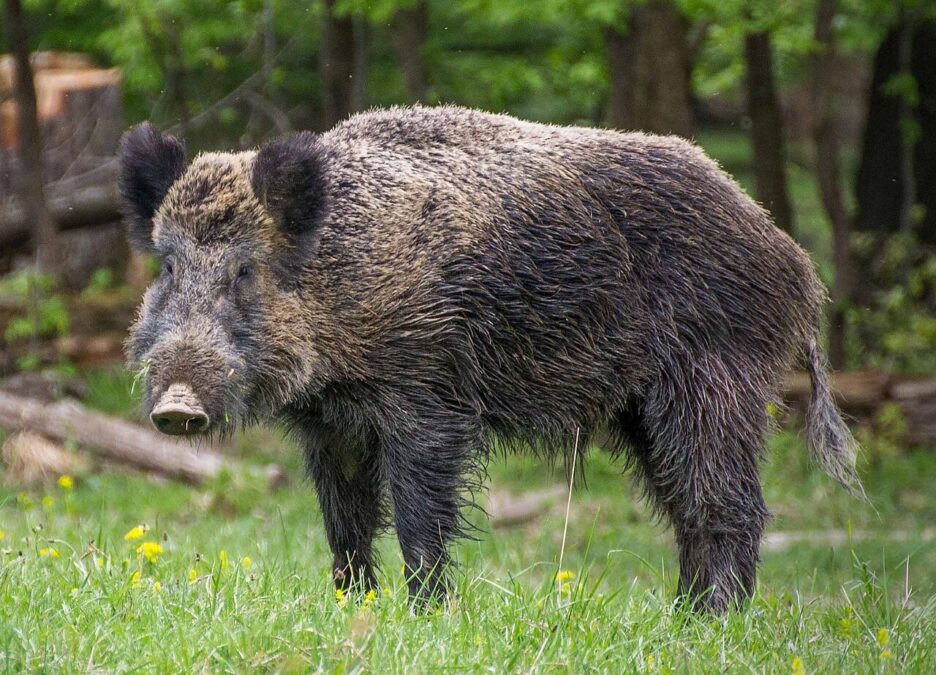
A wild boar (Sus scrofa) in the Lainzer Tiergarten nature reserve in south-west Vienna, Austria. (Valentin Panzirsch/Wikimedia Commons/CC BY-SA 3.0 AT)
The samples were screened for Salmonella and E. coli. The team also exposed the bacteria to a panel of widely used antibiotics and looked for genes associated with virulence: characteristics that can make bacteria more capable of infecting hosts.
There was encouraging news and worrying news. The scientists found scant evidence of Salmonella, but over half the animals carried E. coli, and nearly every strain of that bacterium was resistant to several antibiotics.
The sole Salmonella sample identified was resistant to several antibiotics. However, it did not contain the virulence or resistance genes assessed by the researchers, indicating that the immediate Salmonella threat was comparatively low.
The findings for E. coli, however, were far more troubling.
Of the 100 wild boars tested, 56 yielded E. coli. Of these, 55 – an extraordinary 98.2 percent – met the definition of multidrug resistant, meaning they could survive antibiotics from more than one drug class.
Resistance was especially frequent to sulfonamides, tetracycline, amoxicillin, ampicillin and doxycycline. Several of these are familiar names because they are among the most widely used, affordable first-line antibiotics.
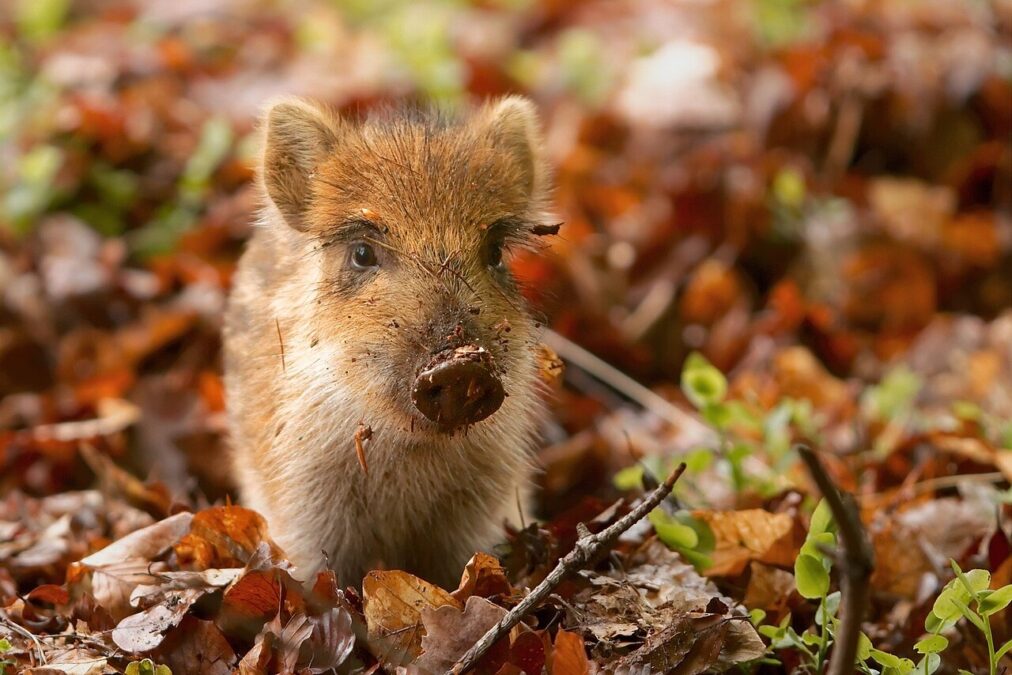
A young wild boar (Sus scrofa) in a wildlife park in the Netherlands. (Sander van der Wel/Wikimedia Commons/CC BY-SA 2.0)
Almost every isolate was still susceptible to ceftriaxone, an antibiotic of critical importance in human medicine. Yet the researchers say that even the limited resistance found should be carefully monitored.
In all, they described the prevalence of drug-resistant E. coli as a "striking finding" – about as close as a scientist comes to saying 'yikes'.
The team also searched for genes linked to bacterial virulence. Nearly 30 percent of the E. coli isolates contained the tsh gene, while smaller numbers carried papC and iss, genes associated with adhesion, survival in the bloodstream and successfully colonising hosts.
Some bacteria harboured more than one of these genes, combinations that might enhance their capacity to cause disease.
Farm managers said the wild boars were not given antibiotics as a routine measure. That leaves an evident question: how did such extensive resistance arise?
Environmental routes for resistance
The researchers think the environment may provide the explanation.
Genes conferring antibiotic resistance can remain in soil and water, pass among environmental microbes, and transfer from one bacterium to another on mobile fragments of DNA.
Wild boars are also mobile and opportunistic, often coming into contact with livestock, wildlife and landscapes altered by people. That creates many possible routes for resistant bacteria to circulate, even where antibiotics are not used directly.
Considering the whole environment around animals, including those in agricultural systems, forms part of Brazil's One Health approach. This framework acknowledges the "intersectoral health challenges" shared by human, animal and environmental health.
Instead of treating antibiotic resistance solely as a medical issue, One Health examines how resistant bacteria may travel through ecosystems – from farms into forests, from wildlife to livestock, and eventually to humans.
This broader systems perspective is the reason the researchers are investigating the relationship between wild boars and antibiotics.
As commercial wild-boar farming grows in Brazil, while escaped animals continue to establish feral populations, these invasive pigs may become an ever more significant reservoir of antimicrobial-resistant bacteria.
The researchers contend that captive wild boars should now be included in the health-surveillance network.
How European wild boars spread through South America
European wild boars were not originally part of South America's environment.
Domestic pigs arrived with European colonists centuries ago. Wild boars, meanwhile, were brought in during the early 1900s by an Argentine rancher who wanted them for hunting. Since then, escaped animals have spread throughout the continent, bred with domestic pigs and formed flourishing populations.
In Brazil, they have prospered in a landscape offering two advantages at once: fragments of forest that offer cover, alongside farmland growing energy-rich crops such as maize and sugar cane.

Their ongoing expansion has made them one of Brazil's most successful – and contentious – invasive mammals.
The research does have significant limitations. Samples were taken between 2014 and 2017, meaning the extent of the problem could have shifted in the intervening years.
The scientists also accepted farm managers' statements that antibiotics were not routinely administered, rather than independently checking those records, and studied animals at just two farms.
Related: Drug-Resistant Bacteria May Be Jumping Between Pets And Humans, Scientists Warn
Nonetheless, the study offers some of the earliest detailed evidence on antibiotic resistance in Brazil's wild boars – and a timely indication that antimicrobial resistance cannot be defeated in hospitals alone.
At times, it begins with noticing what is roaming through the woodland.
Read the full report in Archives of Microbiology.
This article was fact-checked by Fiona MacDonald and edited by Peter Dockrill. While we take pride in our process, we are only human. If you notice an error, please tell us.






.jpg)

Comments
No comments yet. Be the first to comment!
Leave a Comment