
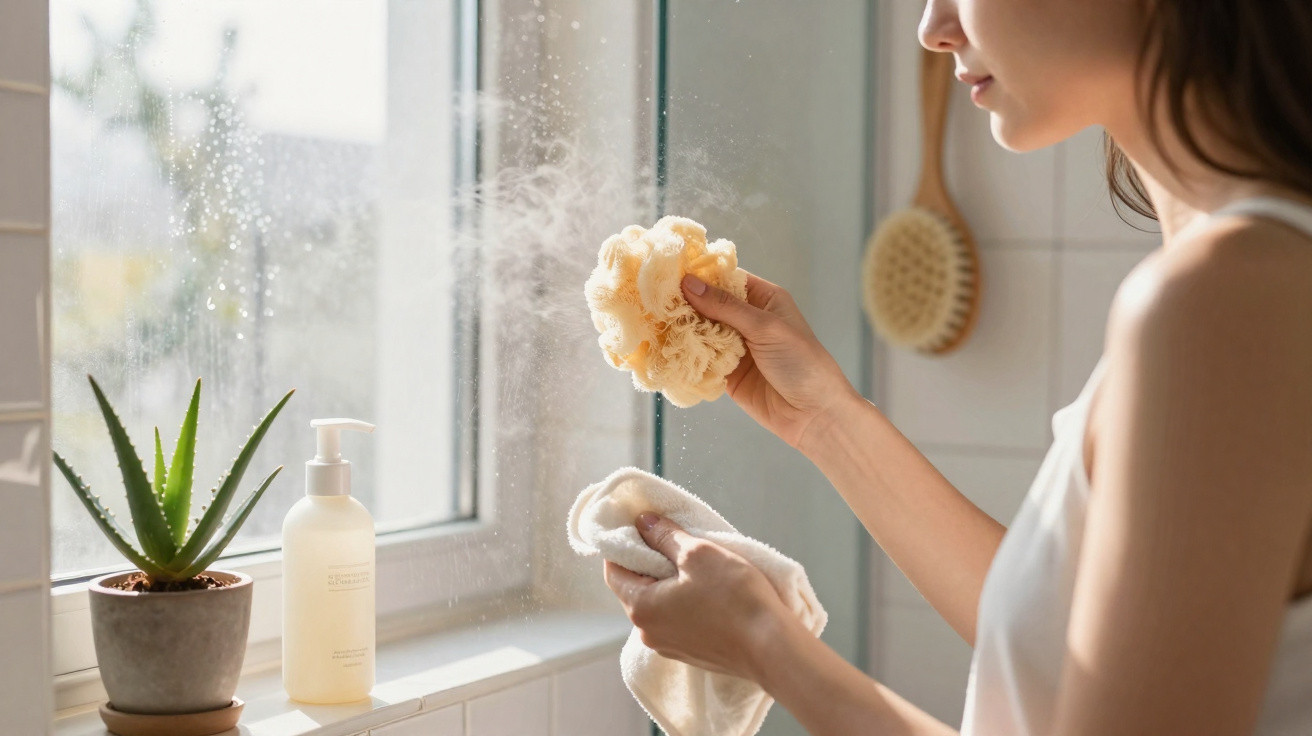
The smooth feeling left after using a loofah may seem like proof of a thorough cleanse. However, cleansing and exfoliating are not the same thing. When friction is involved in every shower, repeatedly stripping away the surface layer can lead to dryness, stinging and sensitivity rather than supporting healthier skin.
Does skin need to be exfoliated every day?
No. Your arms, legs and torso do not need to be scrubbed to be clean. In an everyday routine, water, a mild cleanser on the necessary areas and your hands are enough to remove sweat and dirt. A loofah provides mechanical exfoliation, which may feel pleasant occasionally, but it is not an essential part of daily hygiene.
Melissa Piliang, a dermatologist at Cleveland Clinic, advises using one gently and says there is no need to use a loofah more than twice a week. The best frequency also depends on the individual’s skin, while people with sensitive skin, eczema or active irritation may need to avoid this type of accessory altogether.
Why does excessive scrubbing make skin more sensitive?
The outer layer of the skin helps keep moisture in and irritants out. Repeated, vigorous rubbing can compromise this barrier, causing tiny cracks, flaking and a tight feeling. The more someone tries to “fix” their skin texture by scrubbing, the more intense the irritation cycle may become.
Burning after a shower, ongoing redness and skin that feels rougher a few hours later are signs that exfoliation should be paused. For a routine aimed at sensitised skin, cutting down friction is generally more important than persisting with the removal of surface cells.
Can the loofah itself harbour microorganisms?
Yes. Loofahs stay damp, trap dead skin cells and are often hung in the bathroom, a warm and humid setting. Together, these factors create favourable conditions for bacteria and fungi. Rinsing it thoroughly and allowing it to dry fully between uses are essential parts of caring for the accessory.
Cleveland Clinic advises regular cleaning and periodic replacement. Natural loofahs usually need replacing within a few weeks, while synthetic versions do not last forever either. If it develops an odour, changes colour or the material no longer dries properly, it is best to throw it away before the suggested replacement point.
- Do not apply force: the loofah should glide over the skin, rather than scrape it until it turns red.
- Avoid using it on the face, genitals, wounds, freshly shaved skin or already irritated areas.
- Rinse the accessory well and leave it to dry in a ventilated place after every use.
- Use it less often, or stop using it, if the skin begins to sting, flake or become sensitive.
Watch the video shared by the Patricia Elias YouTube channel, which offers tips on doing an at-home exfoliation or peel.
How can you wash your body without relying on a loofah?
In your daily shower, use your hands to apply a mild cleanser to areas where sweat and oil build up, such as the underarms, groin and feet, while respecting the sensitivity of each area. You do not need lots of foam or to scrub your entire torso vigorously for your body to be clean.
Choose lukewarm water and keep showers brief if your skin tends to dry out easily. Afterwards, pat the skin dry and apply a fragrance-free moisturiser to dry areas. This approach protects the skin barrier more effectively than alternating very hot water, a rough loofah and several minutes of friction.
When can a loofah still be part of your routine?
If your skin tolerates it well, you can use a loofah occasionally with light pressure on more resilient areas of the body. Do not combine it on the same day with grain-based scrubs, strong acids or other treatments that increase surface cell turnover, as their effects may build up.
The helpful question is not whether the skin feels instantly smooth, but how it feels several hours later. If softness comes with burning and tightness, friction is taking its toll. Reducing the frequency may show that less exfoliation leaves skin feeling more comfortable and balanced.





Comments
No comments yet. Be the first to comment!
Leave a Comment