

GLP-1 (glucagon-like peptide-1) medicines may now be most closely associated with weight loss, yet they were first created for – and remain widely prescribed in – diabetes.
Researchers have now identified a potentially important role for GLP-1 treatments in a rare form of diabetes associated with the blood condition transfusion-dependent beta-thalassaemia (TDT).
GLP-1 dulaglutide for TDT diabetes
People with TDT diabetes develop an iron overload that harms the pancreas, impairing its ability to make insulin normally.
A team led by researchers at Ain Shams University in Egypt reports in Diabetologia that the GLP-1 medicine dulaglutide was substantially more effective than standard insulin doses for TDT diabetes across several health measures.
The findings indicate that a once-weekly injection of the GLP-1 drug might take the place of daily insulin injections, considerably simplifying treatment for this type of diabetes.
"The glucagon-like peptide-1 receptor agonist dulaglutide therapy was associated with greater improvements in glycaemic control and variability compared with insulin among adolescents with TDT-induced diabetes, without risk of hypoglycemia or compromising safety," write the researchers in their published paper.
TDT is an inherited disorder in which red blood cells cannot transport the amount of oxygen the body requires. As its name implies, the condition requires regular blood transfusions, which can subsequently cause iron imbalance and damage to the pancreas.
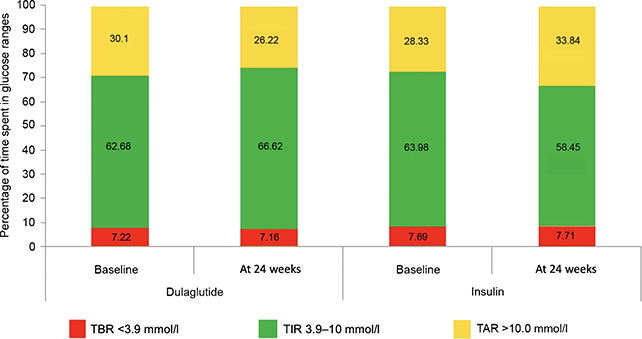
Participants receiving dulaglutide (the two bars on the left) spent more time within the healthy blood sugar range, shown in green, after 24 weeks of treatment. (Adly et al., Diabetologia, 2026)
Over time, TDT may cause diabetes. However, this is neither type 1 nor type 2 diabetes; instead, it shares distinct features of both.
Because dulaglutide is already used to treat type 2 diabetes, the researchers set out to investigate whether it could treat TDT diabetes.
How the dulaglutide trial was conducted
The team enrolled 80 young people aged 10 to 18 with TDT diabetes who had not responded to metformin, a diabetes medicine often given for the condition.
One half of the participants received weekly dulaglutide injections and the other half daily insulin injections. The researchers monitored their health measures for 24 weeks.

"Participants were instructed to refrain from substantial changes in their lifestyle habits throughout the study period," write the researchers.
Dulaglutide, the GLP-1 treatment, was the clear overall winner.
Compared with the insulin group, participants taking the drug experienced less variation in blood sugar levels, greater reductions in average blood sugar, and more time within healthy glucose ranges.
The pattern extended to other health indicators. Those receiving dulaglutide did not experience significant weight gain, unlike those given insulin, and there were also indications that the GLP-1 medicine reduced iron overload.
This is early evidence that will need further investigation, but the results are encouraging.

"The current study has several strengths," write the researchers.
"It is the first to assess the efficacy of dulaglutide in adolescents with TDT-induced diabetes, providing insight into a promising therapeutic modality for this vulnerable population.
"Moreover, it assessed the effect of dulaglutide on pancreatic reserve, iron overload and lipid profile."
Why GLP-1 treatments may help
GLP-1 treatments mimic the naturally occurring glucagon-like peptide-1 hormone. They can encourage the pancreas to release more insulin, slow digestion, and limit the liver's release of glucose – effects that all support blood sugar control.
These GLP-1 medicines have already replaced insulin injections in certain diabetes cases. The notable point here is that TDT diabetes damages both the pancreas and insulin production. Rather than merely supplying additional insulin, dulaglutide appears to support the remaining natural processes that produce it.
Related: A Distinct New Type of Diabetes Is Now Officially Recognised
Much more research remains necessary. The scientists want to test dulaglutide in larger participant groups and better understand how GLP-1 agonists may regulate blood sugar – and potentially lower iron levels.
Researchers are continuing to uncover hidden effects of these treatments, which must all be fully understood before they can be prescribed appropriately.
"Future larger prospectively registered multicenter studies with extended follow-up are warranted to validate these findings and explore the mechanistic pathways," write the researchers.
The research was published in Diabetologia.
This article was fact-checked by Rachel Garner and edited by Peter Dockrill. Although we take pride in our process, we are only human. If you notice an error, please let us know.






Comments
No comments yet. Be the first to comment!
Leave a Comment