

Sleep has become something of a cure-all for the modern age. A large and expanding body of research indicates that sleeping well brings beneficial changes within the body.
Conversely, inadequate sleep has been associated with a broad range of health issues.
The consequences of insufficient sleep extend beyond physical health.
Several recent studies have explored how poor sleep affects adolescents. Many have found that better sleep can enhance students' general well-being, while also indicating that too little sleep may affect young people's academic grades.
Sleep and college students' grades
A first-of-its-kind study, published in the Journal of Political Economy, set out to examine this issue. The researchers identified an approach that improved college students' sleep as well as their college grades.
"Sleep deprivation is extremely common among young adults, yet universities have struggled to find affordable ways to improve student performance," health economist Osea Giuntella from the University of Pittsburgh told ScienceAlert.
"To our knowledge, this is the first field experiment to show that improving sleep causally improves academic performance."
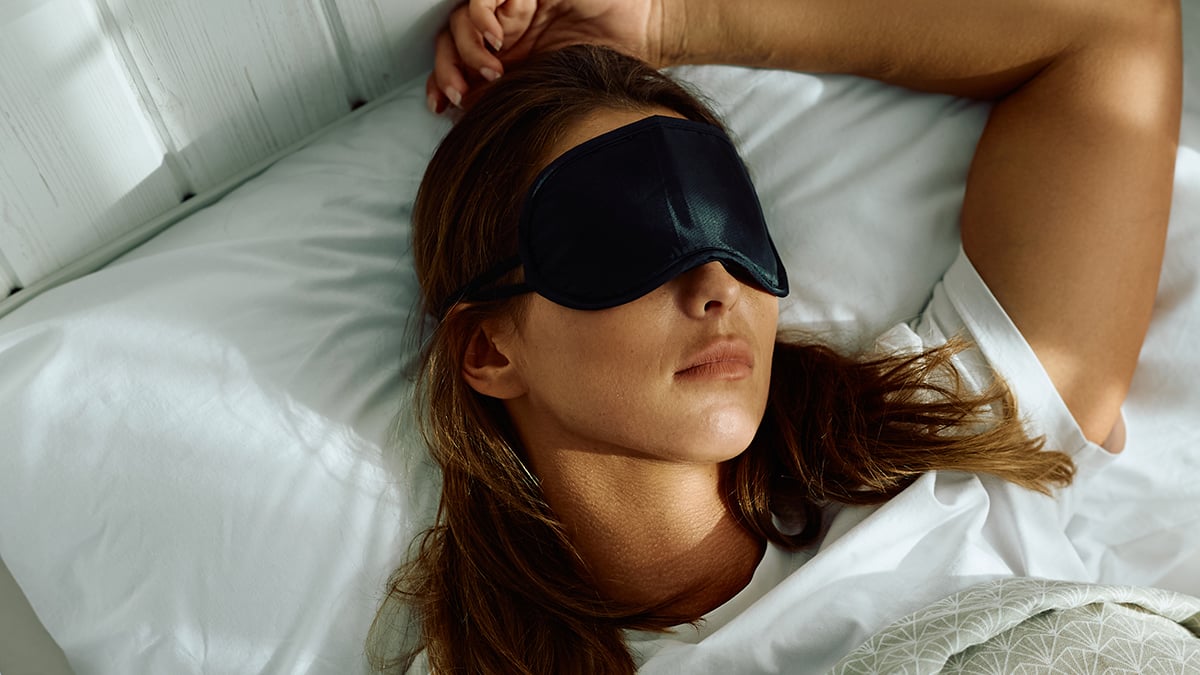
Research suggests that a little extra sleep can improve academic results. (Drazen Zigic/iStock/Getty Images Plus)
Giuntella and his colleagues followed 1,149 student participants across several waves of the experiment.
At the outset, participants slept for an average of only 6.6 hours per night, with less than 6 hours of sleep on 29 percent of weeknights.
"What excites me most is that these are relatively simple interventions that could be adapted and tested in many different settings." – health economist Osea Giuntella
During the intervention phase, every student received a wearable Fitbit health tracker to monitor sleep and was randomly allocated to one of two groups.
Students in the treatment group were encouraged to sleep for at least 7 hours on weeknights. They received personalised bedtime reminders and could earn a modest cash incentive ($4.75 per night for four weeks) when they achieved their nightly sleep target.
Watch the related video on YouTube
The control group, meanwhile, wore Fitbits but received neither instructions nor rewards intended to change their sleeping habits.
"We were interested in two main questions," Giuntella told ScienceAlert. "First, could a simple behavioral intervention help students develop healthier and more persistent sleep habits?
"Second, while many studies had documented a strong correlation between sleep and academic performance, there was very little causal evidence using wearables and real-world settings showing that improving sleep actually leads to better educational outcomes."
The effects of the sleep intervention
The findings now provide an answer. Throughout the intervention, students in the treatment group slept longer: the proportion of nights on which they achieved their 7-hour sleep goal rose by 26 percent, while overall nightly sleep duration increased by 19 extra minutes.

Once the intervention had finished, these students continued to sleep more than at baseline. However, after the rewards and reminders stopped, the benefit fell to only 8 extra minutes of sleep.
"After the first wave of the study in 2019, we had a good sense that the intervention was improving sleep and that some of the effects persisted after the incentives ended," Giuntella said.
"But what really convinced us we had an important finding was when we linked the experimental data to students' official university transcripts and found improvements in GPA."
The data showed that intervention-group students increased their average course performance by 0.075–0.089 grade points in classes taken during the intervention semester. An effect of a similar size persisted into the next semester.
Related: Are People Actually Getting Dumber? Introducing The Reverse Flynn Effect
Although these effects are fairly modest and require replication by further studies, the fact that this sleep experiment improved academic performance is highly promising.
The researchers say the GPA gains observed either exceeded or matched improvements produced by scholarship-style financial incentive schemes, while costing only a fraction as much.
"What excites me most is that these are relatively simple interventions that could be adapted and tested in many different settings," Giuntella said. "Not only universities, but potentially schools and workplaces as well."
The findings are detailed in the Journal of Political Economy.
This article was fact-checked by Rachel Garner and edited by Rebecca Dyer. While we take pride in our process, we are only human. If you notice an error, please tell us.




Comments
No comments yet. Be the first to comment!
Leave a Comment