
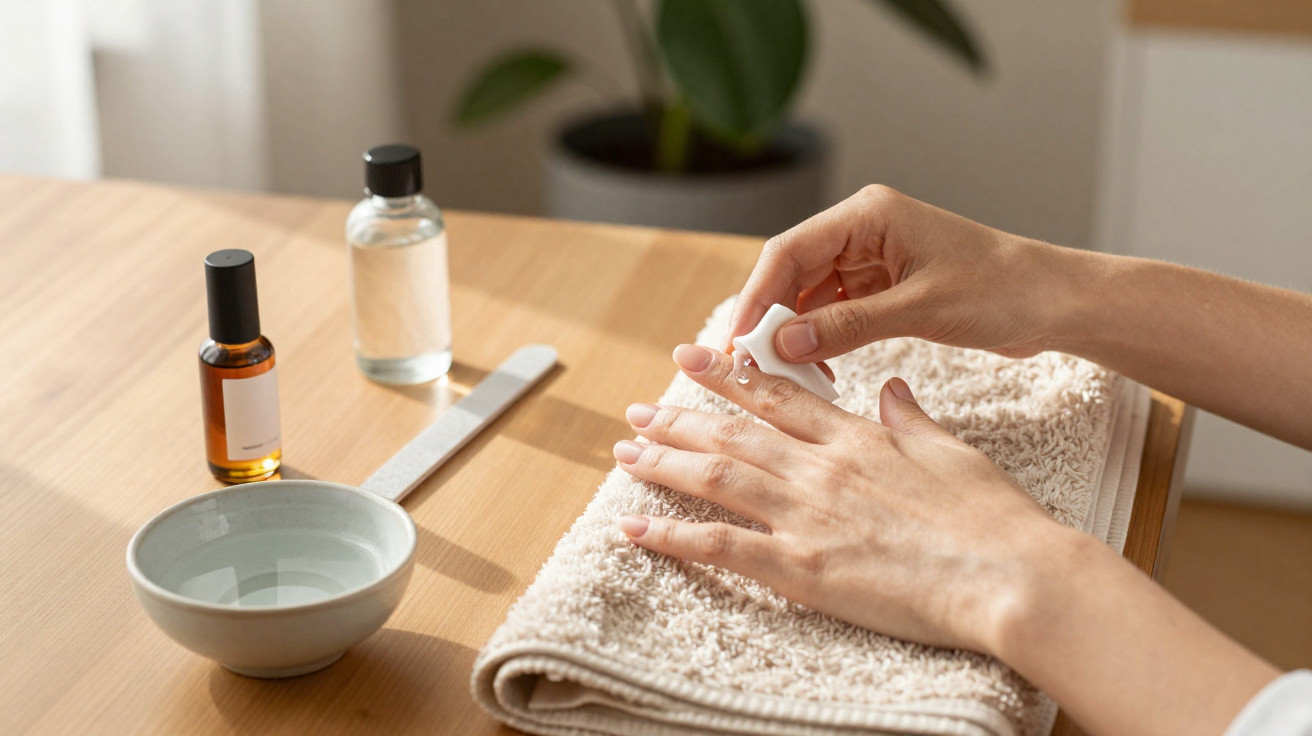
The Japanese technique for preparing the nail before applying nail polish has become increasingly popular with professionals for one straightforward reason: it improves adhesion and helps prevent early chipping. The method starts with a deep clean of the nail surface using a degreaser, often formulated with isopropyl alcohol, to lift away invisible traces of oil. This step can completely alter how the nail polish wears over the following days, particularly for people whose routines involve frequent contact with water and cleaning products.
Does the Japanese technique really improve nail polish adhesion?
The Japanese technique relies on meticulous nail preparation, leaving the surface more able to receive nail polish. If the natural oily layer is not properly removed, adhesion is affected and the polish can start lifting at the tips within a short time.
A dedicated degreaser is essential during this process, as it removes traces of creams, oils and even the fine dust that builds up during daily life. Isopropyl alcohol is generally the active ingredient most used by professionals because it evaporates quickly without leaving a film behind.
How should you prepare the nail before applying nail polish?
Proper nail preparation involves more than making the surface appear clean. The Japanese technique follows a care sequence designed to extend nail polish wear while keeping the nail surface even.
Before applying nail polish, several steps are vital for creating a stable base and improving adhesion:
- Thoroughly remove residue with a degreaser;
- Apply isopropyl alcohol to remove any remaining oil;
- Avoid allowing creams or oils to touch the nails before applying polish;
- Keep the nail surface dry and avoid excessive buffing.
Does a degreaser make a difference to the final result?
Using a degreaser is one of the most important parts of the Japanese technique. It works directly on the nail surface, clearing away any invisible barrier that could disrupt nail polish adhesion.
When this stage is skipped, adhesion is more likely to be uneven, even when using high-quality products. Isopropyl alcohol completes the process by providing a more precise, even final clean.
- Reduces the formation of bubbles in nail polish;
- Improves adhesion in the first coats;
- Lowers the likelihood of premature chipping;
- Provides a more stable base for delicate nail polish applications.
Isopropyl alcohol and its role in nail preparation
Isopropyl alcohol is widely used in the Japanese technique because it effectively removes oil without damaging the nail. It acts as the final degreaser, ensuring the surface is fully clean before nail polish is applied.
This stage has a direct effect on adhesion, since any remaining residue can form a barrier between the nail and the product. In salons, it is applied with cotton wool or dedicated pads, using gentle movements to avoid contaminating the area again.
How proper preparation changes the nail polish result
When the Japanese technique is carried out consistently, the nail gains a more stable surface, improving nail polish performance over the days that follow. Combining a degreaser with isopropyl alcohol helps minimise common problems, such as chipping at the tips and an early loss of shine.
Adhesion becomes more even because the base is free from invisible interference, including natural oils and cosmetic-product residue. This allows nail polish to grip more effectively from the first coat and retain a more consistent finish.



Comments
No comments yet. Be the first to comment!
Leave a Comment