
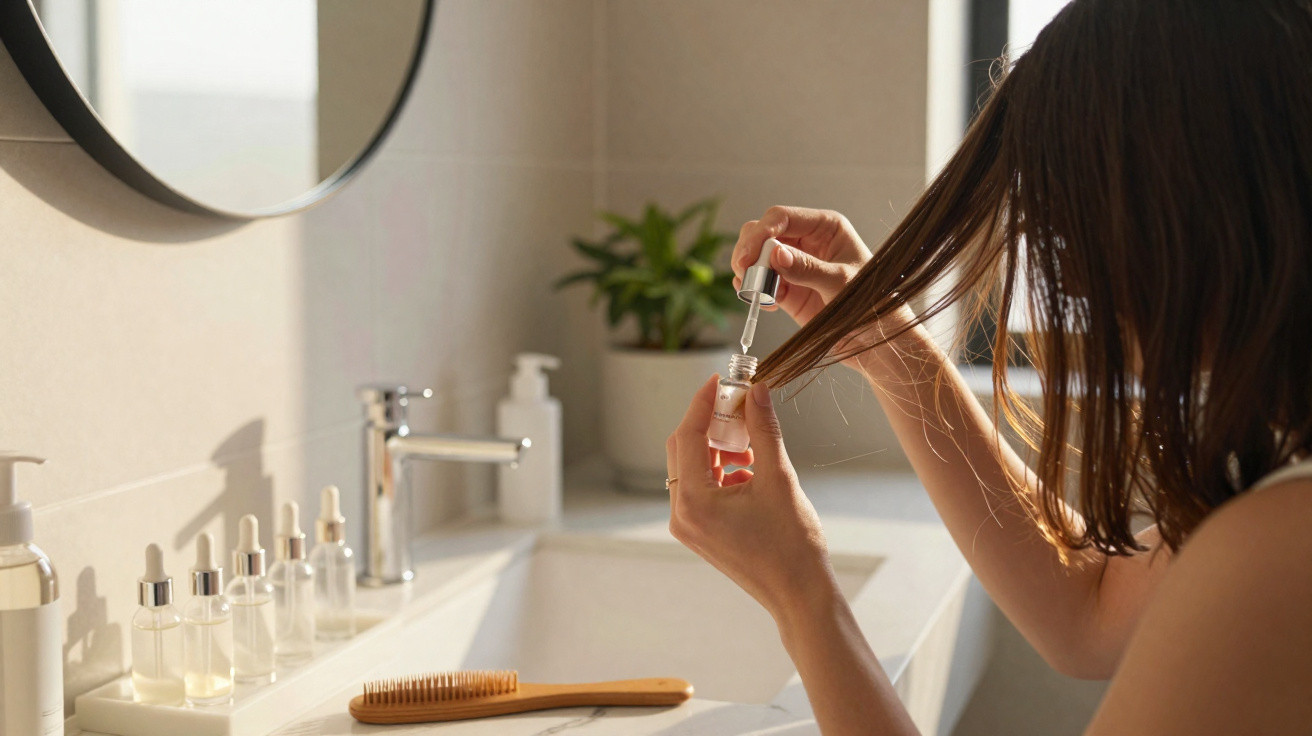
For years, hair ampoules were almost exclusively found in beauty salons. Regarded as one of hairdressers’ most valued tools for enhancing treatments, they acted as a genuine “salon secret” for restoring vitality to the hair.
Used as a concentrated shot of active ingredients within professional protocols, they became known for their ability to revive damaged hair and, within minutes, create hair that looked healthier, more manageable and flawlessly finished.
According to Ana Regina Farias, a hairdresser and hair-process technician at Embelleze, ampoule technology has always been linked with the fast, intensive delivery of active ingredients. “Ampoules contain concentrated ingredients that can work quickly on the hair fibre and are mainly recommended for hair sensitised by chemical treatments, excessive heat and everyday damage,” she explains.
This technology is now starting to feature in at-home products, bringing the intensive-care concept of ampoules to treatment masks and creams, for an experience inspired by professional protocols as part of a regular haircare routine.
How does the ampoule effect work?
These products use the same technological principle: a high concentration of active ingredients and formulas designed to support their absorption and performance within the hair fibre. This enables repairing ingredients to be distributed more efficiently, helping to produce noticeable results after only a few minutes of application.
The technology has made the ampoule experience more practical and accessible, transferring this high performance to stable, easy-to-apply formulas. “Brands such as Novex have already incorporated this concept into fast-acting hair therapies, bringing an experience inspired by professional protocols,” the technician explains.
Targeted treatments for every hair need
Ana Regina Farias says that treatments combining high-performance active ingredients with ampoule-effect technology can be recommended for different hair needs, particularly where there are signs of wear, such as breakage, porosity, dryness, loss of shine and damage caused by colouring, bleaching or frequent use of heated styling tools.
“The choice of treatment should take into account what the hair needs at that particular time. Not all hair needs intensive reconstruction, for instance. The ideal approach is to identify the main damage and choose targeted technologies and active ingredients that provide exactly what the fibre requires,” she advises.
A new stage for hair treatments
This development indicates that the future of haircare is less about one-size-fits-all solutions and more about personalised treatments that combine delivery technologies with specific active ingredients for each need. As a result, treatments are expected to continue progressing towards increasingly intelligent formulas, able to meet a range of demands and provide targeted benefits.
For Ana Regina Farias, this closer connection between the professional world and at-home care represents a significant shift in consumer behaviour. “Today, people want to maintain the results achieved at the salon between appointments. Technology gives them access to increasingly sophisticated treatments at home, making daily care more effective without compromising on practicality,” she concludes.
By Caroline Amorim


Comments
No comments yet. Be the first to comment!
Leave a Comment