
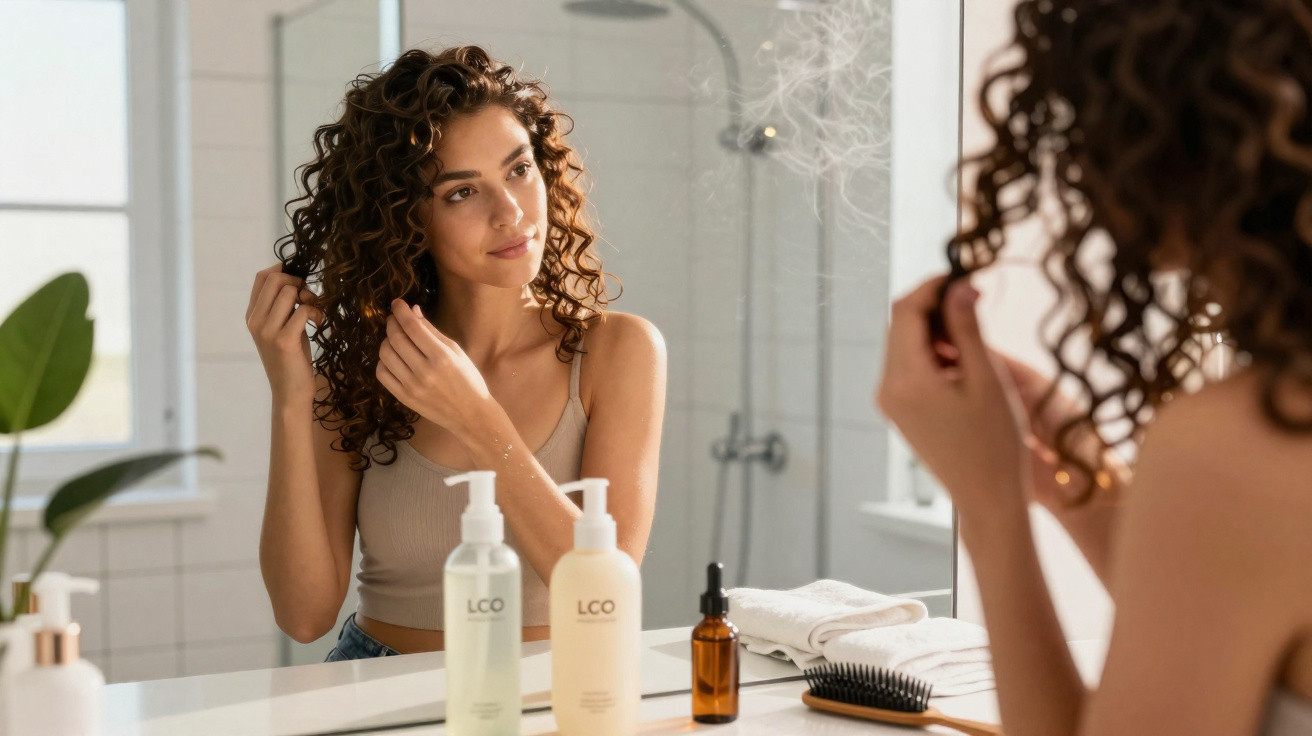
Curly hair can leave the styling routine looking defined, only to develop a layer of flyaways a few hours later. When this happens even after moisturising, the issue may not be a lack of product, but the application order. The LCO method arranges water, cream and oil into three layers to enhance definition and minimise frizz.
Why does curly hair become so frizzy?
The bends and spirals of each strand make it harder for the natural oil produced by the scalp to travel down to the ends. As a result, curly hair often has drier areas that are more vulnerable to friction. When the cuticle is uneven or conditions in the environment change, strands can lose their alignment and create a frizzy appearance.
Frizz can also worsen because of rough towels, dry brushing, excessive heat and handling the hair while it dries. Even moisturised hair may lose definition if products are too heavy or spread unevenly. Styling needs to balance moisture, conditioning and protection without weighing curls down.
How does the LCO method work?
LCO stands for Liquid, Cream, Oil. The technique begins with wet or very damp hair, followed by a suitable leave-in product and a small amount of oil to finish. Each layer has a distinct role in the look and manageability of the hair.
Water provides the starting moisture, while the cream spreads conditioning ingredients that reduce friction and help curls take shape. Oil is applied last to form a light coating, boost shine and lessen roughness. It does not lock in all moisture permanently, but it can slow down moisture loss.
What is the correct order for the three layers?
Carry out the method straight after washing your hair, before it dries fully. Remove only excess water with your hands or a cotton T-shirt, without rubbing. Next, section the hair so the products can be distributed more evenly and overly coated areas can be avoided.
- Liquid: keep enough water in the hair for it to remain damp.
- Cream: apply a small amount of leave-in through the lengths and ends.
- Oil: spread a few drops between your hands, then scrunch the curls upwards from the ends.
Once all three stages are complete, shape the curls using ribboning, finger coiling or simply scrunching the sections. Do not keep touching the hair as it dries, as friction can break up the curl clumps that have formed. Once the hair is completely dry, gently lift the roots to restore volume.
Watch the video shared by the YouTube channel Isa Salustiano, which offers tips on reducing frizz and caring for hair correctly to avoid overly voluminous, puffy hair.
How much product should you use?
Using extra cream or oil does not mean achieving more moisture. Too much can make curls feel weighed down, look dull and appear greasy. Fine hair generally responds better to lightweight leave-ins and one or two drops of oil, whereas thicker strands may need a slightly larger amount.
Your choice should also reflect the hair's porosity and condition. Argan, jojoba and grapeseed oils usually create a lighter finish, while richer options can weigh down certain curl patterns. Apply products to the lengths, avoiding the roots and scalp to reduce build-up and irritation.
How can you tell whether LCO works for your hair?
The LCO method is not a scientific rule that applies to every type of curly hair. Results differ according to the product formulas, the amount used, the weather and the individual characteristics of the hair fibre. Try the technique on an ordinary day, then assess definition, softness, longevity and any residue after the hair has dried.
Do not treat persistent frizz as a sign that your hair needs increasingly heavy layers. Start with a small amount, alter one step at a time and note the outcome. Finding the right combination can transform your daily styling routine and give your curls the definition, movement and confidence you are looking for.



Comments
No comments yet. Be the first to comment!
Leave a Comment