
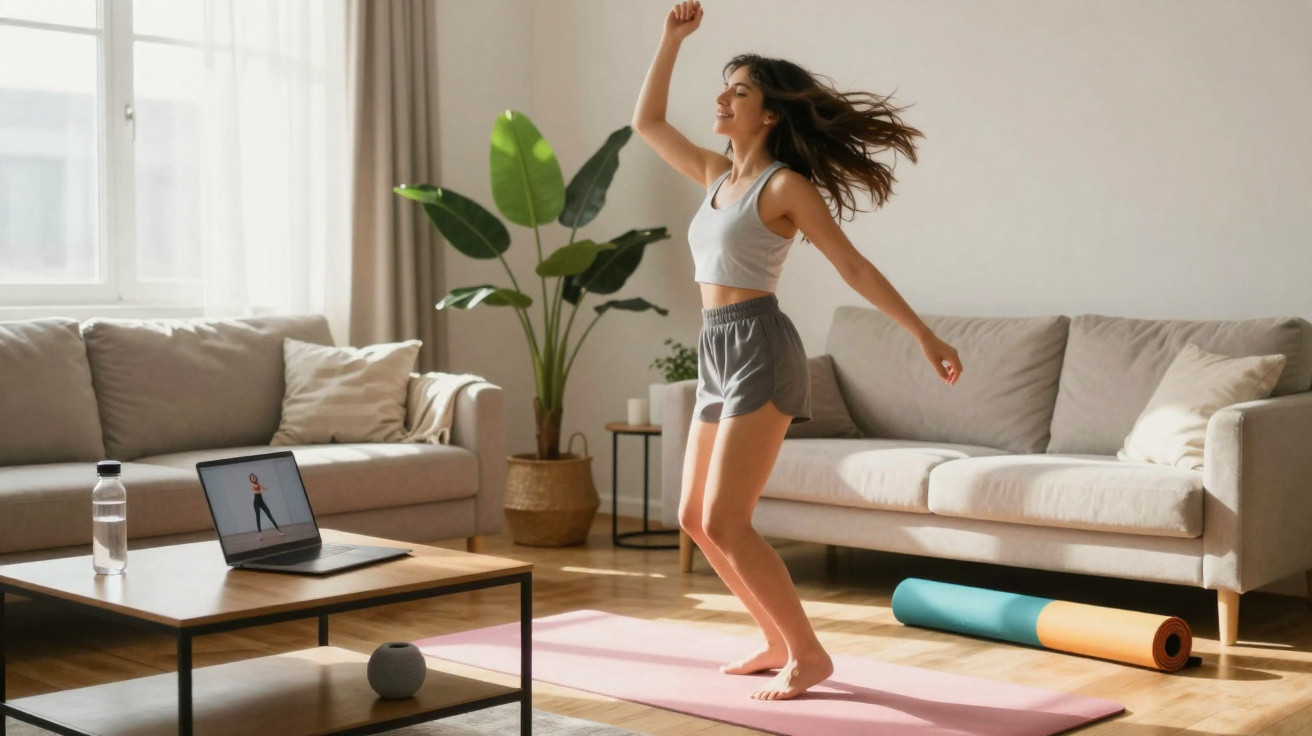
Replacing traditional aerobics classes with rhythmic movement at home is an excellent way to tackle a sedentary lifestyle. Practising dance every day energises the body and provides the right level of exercise to support wellbeing.
How can dancing at home replace aerobics classes?
Doing an aerobic workout without leaving the living room offers unmatched convenience for people with busy schedules. As well as saving travel time, this form of physical activity can burn a high number of calories, supporting health in an accessible and enjoyable way.
Movements set to different rhythms improve coordination and balance without the need for complicated equipment. This adaptability makes it possible to turn the living room into an energetic training space, encouraging the participant to maintain consistency and vitality.
How long do you need to dance continuously to transform your home workout?
Keeping moving steadily, without long breaks, provides the necessary intensity to boost calorie burning and health… Read more
Why is a 30-minute duration recommended?
Sustaining a continuous session of around half an hour allows the cardiovascular system to reach the required effort zone. Guidelines regard this period as ideal for producing positive physiological adaptations, strengthening endurance and the heart.
Using clearly defined time blocks makes it easier to fit the routine into daily life without overloading the schedule. Planning a workout around this moderate duration reduces excessive fatigue and helps prevent early interruptions, delivering an efficient and safe session.
Below is a video from the IDRD – Recreación y Deporte Bogotá YouTube channel, which explores the points discussed in this topic in more detail:
How can you reach the target of 150 minutes per week?
Spreading the recommended target across several days makes it easier to stick to the routine without demanding exhausting effort in a single session. Breaking the total into regular 30-minute sessions makes the goal entirely achievable for anyone looking for energy and drive.
Regular weekly practice brings gradual benefits to the participant’s aerobic capacity. Setting this consistent frequency also builds personal discipline, turning the activity into a healthy habit that improves longevity and posture.
Essential Kit for Dancing at Home
Foundations of an Efficient Session
Here are the essential points for organising daily practice without leaving the living room:
- 1
A clear, obstacle-free space and suitable footwear; - 2
A water bottle within reach for continuous hydration; - 3
Sessions lasting 25 to 35 minutes at a moderate pace.
What guidance helps you train safely?
Preparing the home area by ensuring the floor is free from hazards is essential for preventing accidents while doing rhythmic steps. Wearing suitable trainers with cushioning protects the joints from impact, enabling smooth, comfortable movement without unexpected problems.
Keeping track of workout intensity through breathing and perceived effort prevents unnecessary strain on the body. Starting with gentle warm-ups and maintaining a moderate pace safeguards the muscles, encouraging gradual and safe progress.
To ensure a safe, well-organised workout at home, follow these steps:
- Prepare the area by moving furniture and objects out of the way;
- Wear cushioned footwear to protect the joints;
- Stay hydrated throughout the entire dance session.
How can you stay motivated when dancing at home?
Choosing music styles you enjoy makes every session more appealing and reduces the feeling of repetitive effort during the week. Changes in rhythm stimulate the brain, refresh daily enthusiasm and turn the activity into real stress relief.
Tracking improvements in rhythm and endurance strengthens the sense of personal achievement with every completed class. Setting realistic targets and celebrating ongoing progress helps establish the habit, ensuring a better quality of life.



Comments
No comments yet. Be the first to comment!
Leave a Comment