
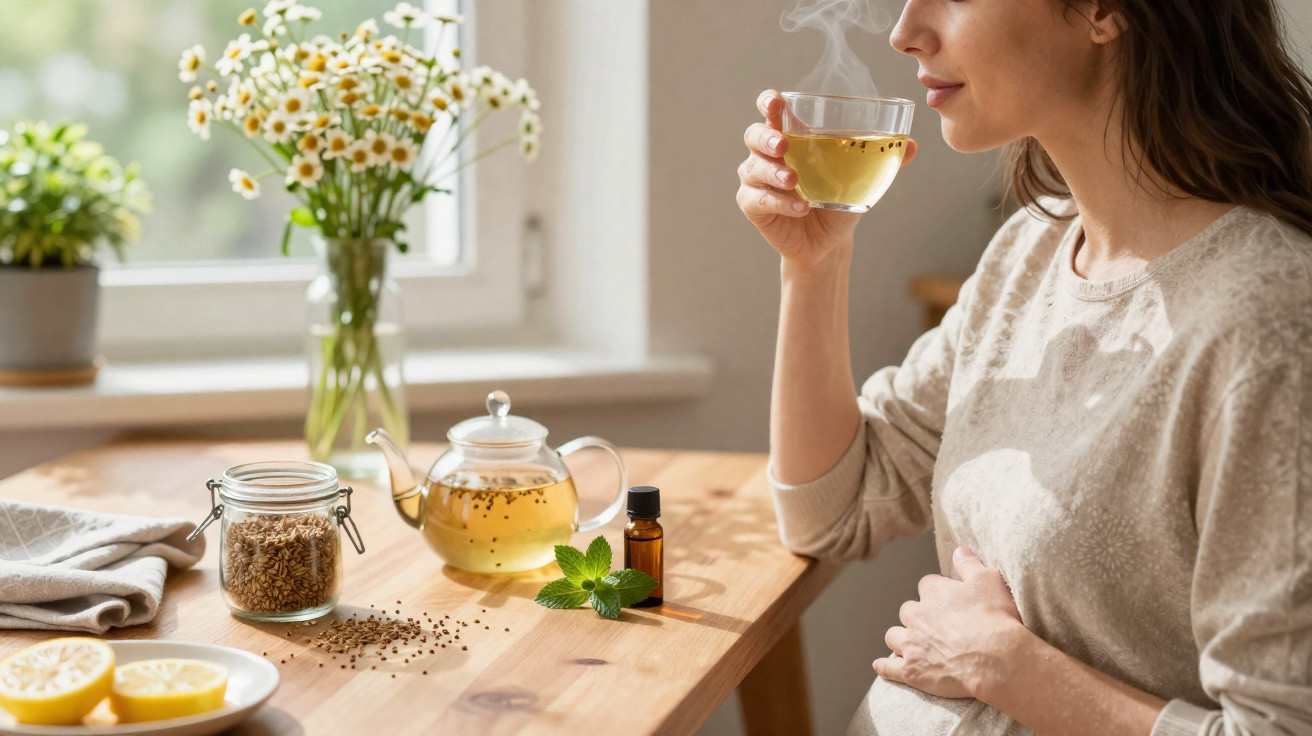
After rich winter meals, many people notice the effects in March: a bloated, tight and sluggish-feeling stomach.
A simple herbal infusion can provide surprisingly quick relief.
As the days grow brighter again, many of us want to feel lighter in our stomachs too. Raclette, fondue and festive roasts make way for lighter meals – along with the question of how to get rid of the persistent bloating that has been bothersome since the winter months. A tried-and-tested herbal remedy can, quite literally, get the bowel moving again in March.
Why bloating is so common in spring
Many people experience it: once the calorie-heavy winter season is over, their stomach still feels constantly bloated. Trousers feel tight, the abdomen feels stretched and, at times, cramp-like pain may occur too. Doctors refer to excessive gas and swallowed air as aerophagia.
The causes are usually harmless, though uncomfortable:
- rich, fatty meals during winter
- plenty of sugar and white flour, for example in biscuits, cakes or pancakes
- eating and drinking too quickly, which leads to swallowing lots of air
- stress, which disrupts normal bowel movements
- too little exercise during cold weather
Poorly chewed, difficult-to-digest food remnants can begin to ferment in the bowel. This produces gases that build up in the abdomen and create pressure. This is precisely where the “March infusion”, so valued by herbal practitioners, comes in.
The March infusion: fennel seeds as a natural bloating remedy
At the heart of this remedy is a classic household staple: fennel seed tea. In herbal medicine, fennel is considered one of the most important plants for tackling bloating. Its small seeds are among the so-called carminative plants – the technical term for herbs that help release gases in the digestive tract and make them easier to pass.
“Fennel seeds reduce gas formation in the bowel, bind existing gases and make them easier to expel – leaving the stomach feeling noticeably lighter.”
Herbal practitioners describe several effects:
- They stimulate the production of digestive juices, helping food to break down more effectively.
- They reduce the formation of new gases in the bowel.
- They help to release and pass gases that are already present.
- They have an antispasmodic effect, easing abdominal cramps and spasms.
How to prepare a fennel infusion correctly
Fennel seeds are available from organic shops, health-food shops, well-stocked supermarkets and pharmacies – loose in jars or packets, or already blended into teas. The “March infusion” takes just a few minutes to make:
- Put around one teaspoon of fennel seeds into a cup.
- Pour over hot water that is no longer boiling vigorously.
- Cover the cup and leave to infuse for around 10 minutes. This prevents the essential oils from escaping with the steam.
- Strain, then drink in small sips.
Many people tolerate two to three cups spread across the day very well, for example after meals and one cup in the evening. Anyone who is particularly sensitive or takes medication should ask their GP or pharmacist if unsure.
Fennel seeds for cramps and a tight stomach
Fennel seeds offer another advantage: they are antispasmodic, meaning that they can relieve cramping. This is especially useful when bloating is accompanied by pulling or stabbing pains.
“Especially in cases of bloating with cramp-like pain in the lower abdomen, a fennel infusion can provide quick relief.”
The essential oils in fennel relax the intestinal muscles. Bowel movement returns to normal, gases can escape more easily and the feeling of pressure eases. Many sufferers report that their stomach settles noticeably within half an hour.
Other seeds that can help your stomach
Fennel is not the only plant that can support the digestive tract in spring. Herbal practitioners often use a combination of different carminative seeds. Their effects complement one another and they add variety to a cup of tea.
| Plant | Effect in the bowel |
|---|---|
| Aniseed | Mildly antispasmodic, relieves bloating and has a slightly sweet flavour |
| Caraway seeds | A classic remedy for bloating; supports the digestion of fatty foods |
| Cardamom | Warming, stimulates the stomach and bowel, with an aromatic flavour |
| Liquorice root | Soothes the mucous membranes, is slightly sweet and is popular for heartburn |
| Angelica | Supports the stomach and liver; useful for feelings of fullness |
Ready-made “tummy comfort” or “anti-bloating” teas often contain blends of fennel, aniseed and caraway. If preferred, a pharmacy can prepare an individual blend.
Massage, breathing and chewing: extra support for your bowel
An infusion works even better when everyday habits are also more stomach-friendly. Three simple adjustments can make a difference without much effort.
Abdominal massage with peppermint oil
A gentle abdominal massage can help gases to pass. Use a carrier oil, such as olive or almond oil, mixed with one drop of peppermint oil. Always dilute it heavily, as essential oils are highly concentrated.
Here is how to do it:
- Rub a small amount of the oil mixture between your hands.
- Using a flat hand, stroke clockwise around the navel – this broadly follows the course of the large intestine.
- Massage with gentle pressure, but without causing pain, for two to three minutes.
This may stimulate bowel movement, relax the abdominal wall and ease the feeling of tightness.
Breathe calmly and eat more slowly
Eating quickly, typing on your phone while eating or having meals while sitting on the sofa can all encourage air to build up in the stomach. When you rush food, you literally swallow air with every forkful. That air enters the digestive tract and increases the volume of gas there.
“Digestion starts in the mouth: chewing thoroughly takes the strain off the stomach and bowel and significantly reduces the risk of bloating.”
Simple habits can help:
- Chew every mouthful properly until it has a soft, pulpy texture.
- Put your cutlery down briefly between mouthfuls to slow yourself down.
- Sip water in small amounts rather than gulping down large quantities.
- Cut back on fizzy drinks, as they create additional gas pressure.
When to take care
Persistent or severe abdominal pain, blood in the stool, sudden weight loss or fever require medical advice; even the best herbal infusion is no substitute for a doctor. Such symptoms may point to a more serious issue, such as inflammation in the bowel or a food intolerance.
Take particular care with concentrated fennel or caraway oil: essential oils should never be applied to the skin undiluted, and they should certainly not be taken internally without clear professional guidance. Anyone who is pregnant, has a chronic condition or takes several medicines should always briefly check herbal remedies with their GP or pharmacist.
How to fit the March infusion into your daily routine
Many people report that a two- to three-week “fennel course” works well in spring. It could look like this:
- one cup of fennel tea on an empty stomach in the morning
- one cup of a seed blend after the main meal at lunchtime, containing fennel, aniseed and caraway
- one final cup in the evening to settle the stomach before bed
Alongside this, light, fibre-rich meals with plenty of vegetables, enough water and a daily walk of at least 20 minutes can help. Movement literally gets the bowel going again, so gases are less likely to remain trapped.
People who try this March routine often notice a difference after just a few days: less pressure in the stomach, fewer embarrassing gas noises and a flatter feeling around the waistband. The herbal infusion does not replace a balanced diet, but it can make the transition from a heavy winter to a lighter spring considerably more pleasant.






Comments
No comments yet. Be the first to comment!
Leave a Comment