
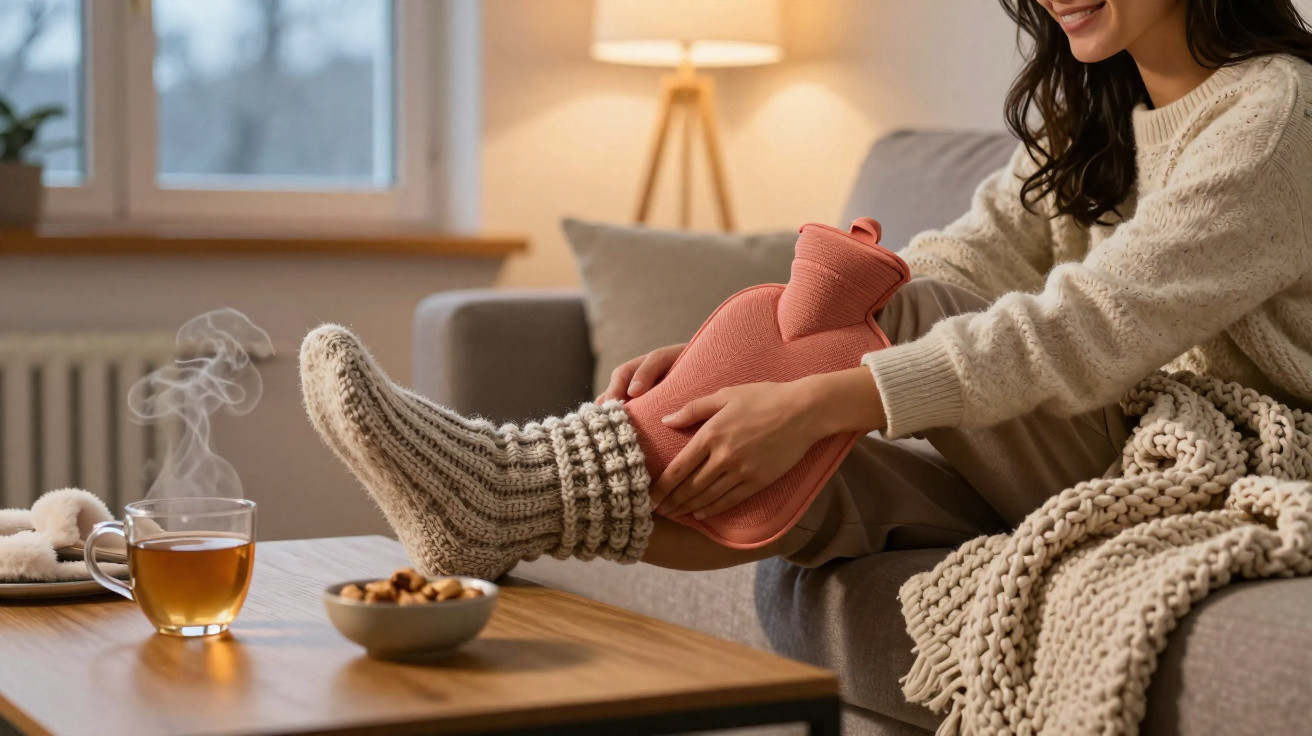
Cold toes in bed, freezing feet on the sofa and constant shivering despite a blanket: many people are familiar with this frustrating issue. Cool feet are usually caused by more than simply wintry air; circulation throughout the body and unsuitable socks can both play a part. A few targeted adjustments can often ease the problem considerably.
Why feet are so often freezing in the evening
The body treats hands and feet as reserve areas. When temperatures drop, it redirects warm blood to the heart, lungs and brain first. As a result, the temperature in the extremities falls noticeably.
“Cold feet in cold weather are initially a protective response by the body – but over time they can point to an underlying problem.”
Women report cold feet considerably more often than men. There are several reasons for this:
- a different distribution of body fat
- thinner skin on the feet
- often less muscle mass, which produces less heat
However, other factors affect people of all genders too.
When circulation is not working as it should
Poor or impaired circulation is a very common cause. Typical triggers include:
- an unfavourable diet lacking iron and minerals
- not drinking enough fluids during the day
- shoes that are too tight or restrictive socks
- raised cholesterol levels, which narrow blood vessels
- smoking, which constricts blood vessels and slows blood flow
- certain medicines that affect the blood vessels
Anyone who constantly struggles with freezing feet despite an adequately warm environment should consider their circulation and, if in doubt, seek medical advice to establish whether there is another cause.
When cold feet are a warning sign of illness
In some cases, cold feet are more than a comfort issue and may indicate conditions such as:
- diabetes
- anaemia
- an underactive thyroid
- Raynaud’s syndrome (an episodic circulation disorder affecting fingers and toes)
If numbness, tingling, pain while walking or discolouration of the toes also occurs, this should be discussed with a doctor promptly.
The right everyday kit for freezing feet
Those who feel cold during the day are likely to take chilly feet to bed at night. The foundation for warm feet therefore starts with the right shoes and socks.
Shoes: warm, supportive and well insulated
- Thick, non-slip soles: These insulate against cold floors and provide secure footing. When you are not slipping, you tense your toes less, helping circulation remain better.
- Water-repellent materials: Wet feet become cold extremely quickly. Shoes should therefore be at least largely waterproof.
- Extra insoles: Felt or thermal insoles add another insulating layer beneath the foot.
- A warming trick: Place a ball of tissue paper warmed on a radiator in the shoe shortly before putting it on. This warms the inside without damaging the material.
- Enough room: Shoes must not pinch. Toes that are tightly squeezed have poor circulation and stay cold.
Socks: fabric and fit matter
“Even the best sock will not keep you warm if it pinches or leaves the foot damp.”
- Wicking away moisture: Socks should do more than insulate; they also need to absorb sweat.
- Natural fibres: Cotton, wool or specialist sports performance socks are all suitable choices.
- Wearing two layers: Start with a thin sock, such as silk, then add a slightly thicker one. Crucially, choose different sizes so the foot is not compressed.
- Take care in bed: Anyone sleeping in socks should opt for loose cotton pairs. Tight cuffs can restrict blood vessels around the ankles.
Quick evening relief: warming feet in the living room
When toes are already cold, focused measures can help get the blood moving again.
Massage: a warming boost in minutes
A brief foot-massage routine, ideally twice a day, works like a mini workout for the blood vessels. Knead, press and roll the heel, sole, instep and every toe thoroughly until a clear feeling of warmth develops.
If desired, make a simple foot balm using beeswax, shea butter and a plant-based oil. Its lightly rich texture helps with the massage and keeps the skin supple.
Movement: small exercises, significant effects
Circulation can quickly become sluggish when sitting on the sofa in the evening. Try the following:
- while seated, lightly stamp your feet on the floor
- point your toes towards the ceiling and then towards the floor 20 times in succession
- rotate each ankle ten times inwards and outwards
- take a brisk walk every day – even 20 minutes gives circulation a noticeable boost
Foot bath: warm, not overly hot
A foot bath can work wonders, but the water should not be scalding. Around 37 to 39 degrees is ideal. Water that is too hot puts strain on the blood vessels and dries out the skin.
For an extra touch, add a few drops of an essential oil, such as eucalyptus, blended with a carrier oil like argan oil. Around 15 minutes is sufficient; then dry the feet thoroughly and put on warm socks.
Wool socks and more: heat retainers for the evening
Thick wool socks are particularly effective from late afternoon onwards. They help regulate temperature, absorb moisture and are slower to develop odour. Silk socks offer similar benefits but are much thinner, making them ideal for anyone who dislikes bulky layers.
A warm night: preventing cold toes in bed
Warm the bed before sleep rather than shivering
Going to bed with freezing feet often means lying awake for a long time. It is better to warm the bed deliberately beforehand.
- a warming hot-water bottle
- a special heat stone or microwaveable gel cushion
- a heated grain cushion placed at the foot of the bed
Place it in the bed about half an hour before going to sleep, then remove it or move it to the foot of the bed so it does not become too hot.
Raise the feet slightly
When lying down, blood can collect more readily around the torso. A small pillow or folded blanket beneath the lower legs may improve the return flow from the legs. This supports circulation in the feet and creates a warmer feeling.
Lifestyle changes to reduce cold feet long term
Alongside shoes and quick warming methods, it is worth looking at everyday habits. Adjusting a few routines can deliver lasting benefits.
Warming foods and essential nutrients
Hot meals support the body’s internal sense of warmth. Spicy dishes containing chilli or ginger can additionally stimulate circulation, as can a hearty vegetable soup.
For healthy blood vessels and a good blood count, choose foods containing vitamin B12 and omega-3 fatty acids, for example:
| Food | Benefit for circulation |
|---|---|
| Oily fish (e.g. salmon, mackerel) | provides omega-3 and supports blood vessels |
| Nuts and walnuts | healthy fats for flexible blood-vessel walls |
| Ginger, onions, garlic | stimulate circulation and have a mildly vessel-widening effect |
| Green vegetables, apricots, celery | vitamins and minerals for blood formation and blood vessels |
A balanced diet that is not overly high in fat generally supports the heart and circulation, and therefore temperature regulation in the feet as well.
Drink enough, even in winter
When fluid intake is too low, blood becomes slightly more concentrated and the body cools more quickly. The straightforward response is to drink regularly, preferably water or unsweetened tea. Keeping water bottles visible on a desk or setting small smartphone drinking reminders can make this easier to maintain.
Less coffee, fewer cigarettes
Caffeine can constrict blood vessels, particularly in the extremities. Those already prone to cold feet are better choosing herbal tea in the evening rather than a late espresso.
Tobacco has a similar effect: smoking significantly slows blood flow to hands and feet. Many people notice after just a few smoke-free weeks that temperatures in their fingers and toes become noticeably more stable.
When to see a doctor – and what you can do yourself
Anyone persistently dealing with ice-cold feet should watch for warning signs. Pale or bluish toes, pain while walking, numbness or open areas on the feet should be assessed by a medical specialist. A GP or angiologist, a vascular specialist, can check blood vessels and nerve function.
At the same time, much can be managed independently: exercise regularly, keep the body warm, wear comfortable shoes and follow a diet that supports blood vessels. Many people find that even small routine changes – such as a daily walk or consistently wearing warm, non-restrictive socks – make the difference between sleepless nights and comfortably warm feet.





Comments
No comments yet. Be the first to comment!
Leave a Comment